







Motor Insurance
US-Spec Classic Car Insurance UAE 2026: Modification Rules

Importing a US-spec classic car to the UAE is a rewarding pursuit — but 2026 brings stricter RTA classifications and tighter insurance underwriting for non-GCC vehicles. Before your vintage American muscle clears customs, understanding the modification roadblocks and Agreed Value policies that determine your coverage could save you thousands. Compare motor insurance plans on eSanad before your next step.
Understanding the UAE's 2026 Classification for US-Spec Classic Imports
The RTA now uses a tiered classification system — Categories A through F — to determine how a classic vehicle may be registered and, critically, which insurance products are available to it. US-spec vehicles aged 25 years or more qualify for import under the longstanding 25-year rule, but 2026 mandates go further: vehicles must demonstrate "Period-Correct" modification status to retain their classic plate designation.
Category A and B plates (pre-1960s vehicles in original condition) attract the most favourable insurance terms. Categories D through F — which typically cover 1990s US-spec imports with aftermarket modifications — face the greatest scrutiny. The RTA's technical inspection now cross-references MoIAT (Ministry of Industry and Advanced Technology) records to verify that any structural or engine changes are certified.
Collectors planning exhibition use should also review the Classic Car Mileage Limits 2026: UAE Exhibition Use Guide, which explains how annual kilometre caps affect policy validity.
Insurance Impact: How Modifications Affect Underwriting for Non-GCC Vehicles
Underwriters in 2026 treat US-spec imports as high-risk by default. The core issue is that these vehicles were engineered to meet FMVSS (Federal Motor Vehicle Safety Standards), which diverge significantly from UAE and GCC homologation requirements. Each deviation becomes a liability rating factor.
The three most critical modification triggers:
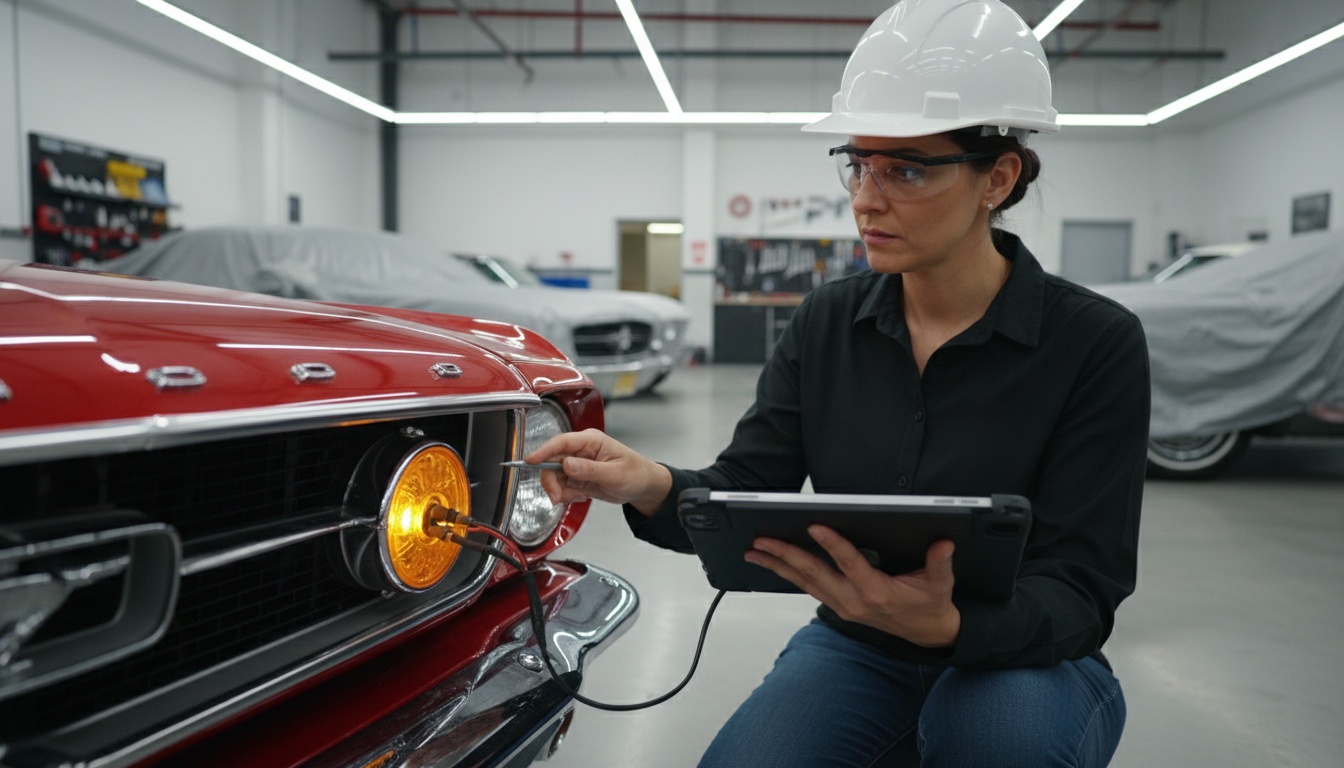
- Lighting and indicators: US-spec vehicles use red rear turn signals. UAE law mandates amber. Failure to convert prior to inspection results in a high-rejection risk on your insurance application.
- Engine and performance modifications: Aftermarket turbos, intake systems, or ECU tunes that lack MoIAT certification can void your coverage entirely — even for incidents unrelated to the modification.
- Structural changes: Any chassis reinforcement or roll-cage addition requires an independent engineer's report accepted by both the RTA and your insurer.
| Feature/Component | US Standard (Stock) | UAE 2026 Mandatory Modification | Insurance Risk Level |
|---|---|---|---|
| Lighting and Indicators | Red rear turn signals | Amber turn signals (Mandatory) | High — Rejection Risk |
| Side Mirrors | Flat/Convex mix | Arabic script warning (Recommended) | Low — Premium Loading |
| Engine/Performance | Aftermarket Turbo/Intake | ESMA/MoIAT Certification | Critical — Voids Coverage |
Failure to disclose a US-sourced performance chip or ECU tune is treated as material non-disclosure. In a 2026 motor accident, this triggers total claim rejection. Always declare every modification — even factory options — to your broker.
For broader context on how GCC versus non-GCC registration affects your premiums, the GCC vs Non-GCC Vehicle Insurance breakdown is essential reading before you approach any underwriter.
Comprehensive vs. Third-Party: Coverage Limits for Modified Vintage Imports
Most UAE insurers default to Third-Party Liability only for non-GCC imports unless an Agreed Value assessment is completed by a certified independent appraiser. This is the single most important financial protection a classic car owner can secure.
Agreed Value vs. Market Value — why it matters:
- Market Value policies pay out what your car is worth at the time of loss. For a modified US-spec classic, depreciation calculations rarely reflect true collector value.
- Agreed Value policies fix a pre-determined sum at policy inception. If your 1969 Chevrolet Camaro is assessed at AED 180,000, that is what you receive — no depreciation argument.
In 2026, insurers offering comprehensive cover on modified classics also increasingly include a garage-bound clause — limiting coverage to named storage locations outside peak hours. This is especially common for Category D–F RTA classified vehicles.
Understanding the difference between agency and non-agency repair options is equally critical; the Agency vs Non-Agency Repair for Imports guide explains how repair routing affects claim payouts for non-standard vehicles.
Compare & Choose a Plan
Essential Checklist: Preparing Your US-Spec Classic for UAE Insurance Approval
Use this checklist before approaching any insurer for a classic car motor policy:
- Obtain RTA Category Classification — Confirm your vehicle's Category (A–F) via the RTA portal before requesting insurance quotes.
- Convert lighting to UAE standard — Replace red rear turn signals with amber units. Retain receipts and professional installation records.
- Secure MoIAT certification for all engine mods — Submit via the MoIAT portal for any non-original drivetrain components.
- Commission an Agreed Value appraisal — Use a UAE-certified classic vehicle appraiser. Share the report with at least three insurers for competitive quotes.
- Declare every modification in writing — Include factory options, aftermarket additions, and any repairs using non-original parts.
- Review your mileage and usage — Exhibition-use policies carry lower premiums but restrict road use. Confirm your intended usage pattern matches policy wording.
- Check your renewal calendar — The Ramadan 2026 Car Insurance Renewal Guide highlights processing delays during peak periods that can leave you uninsured between registrations.
You can compare classic and vintage motor insurance plans directly on licensed platforms to find underwriters who specialise in non-GCC imports.
Get a Free Quote Now
Conclusion
Bottom line: Insuring a modified US-spec classic car in the UAE in 2026 demands proactive compliance — amber indicator conversions, MoIAT certification for engine modifications, and an Agreed Value assessment are non-negotiable starting points. The RTA's Category classification system directly determines your insurance options, and non-disclosure of any modification remains the fastest route to a rejected claim.
Short Summary: 2026 UAE rules for insuring US-spec classic cars: RTA classifications, amber light mandates, MoIAT certification, and Agreed Value policies explained.
Meta Description: Insuring a US-spec classic car in UAE in 2026? Learn RTA categories, modification rules, and Agreed Value cover to protect your import.
Slug: us-spec-classic-car-insurance-uae-2026-modification-rules
Explore Plans →
FAQ
Can I get comprehensive insurance for a modified 1990s US-spec car in 2026?
Yes, but only after an Agreed Value appraisal by a certified appraiser and full MoIAT certification of modifications. Without these, most insurers will limit you to Third-Party Liability only.
What is Agreed Value and why is it vital for imported classic cars?
Agreed Value is a pre-set payout amount fixed at policy inception, protecting you from depreciation-based claim reductions. For collector vehicles whose market value is hard to benchmark, it is the most financially sound coverage structure available.
Does the RTA Classic Plate automatically guarantee insurance approval?
No. The Classic Plate confirms RTA registration eligibility, but insurers conduct independent underwriting assessments. Modifications that do not meet UAE standards can still result in coverage refusal or exclusions.
How do aftermarket US performance parts affect my UAE insurance premium?
Uncertified performance parts — turbos, ECU tunes, cold-air intakes — are treated as high-risk modifications. They increase premiums significantly and, if undisclosed, void your policy entirely in the event of a claim.
Are US-spec salvage title imports with rebuilt status insurable under 2026 UAE rules?
Rebuilt-title vehicles face near-universal rejection for comprehensive cover. Some specialist brokers offer Third-Party Liability with a salvage-title endorsement, but Agreed Value policies are generally unavailable for this category.
Editorial note: This article is for general information and does not constitute insurance advice. Always confirm terms with your insurer.