






Motor Insurance
Classic Car Engine Swap Insurance UAE 2026: Restomod Guide
Planning an engine swap on your vintage ride in the UAE? Before your mechanic lifts a spanner, understanding how classic car insurance responds to modified engines is critical. From RTA compliance to agreed value policies, this guide covers every insurance implication of restomodding in 2026 — so your passion project doesn't become an expensive liability. Explore your motor insurance options on eSanad before you begin.
Understanding Engine Swaps: Why UAE Classic Car Owners Upgrade Vintages
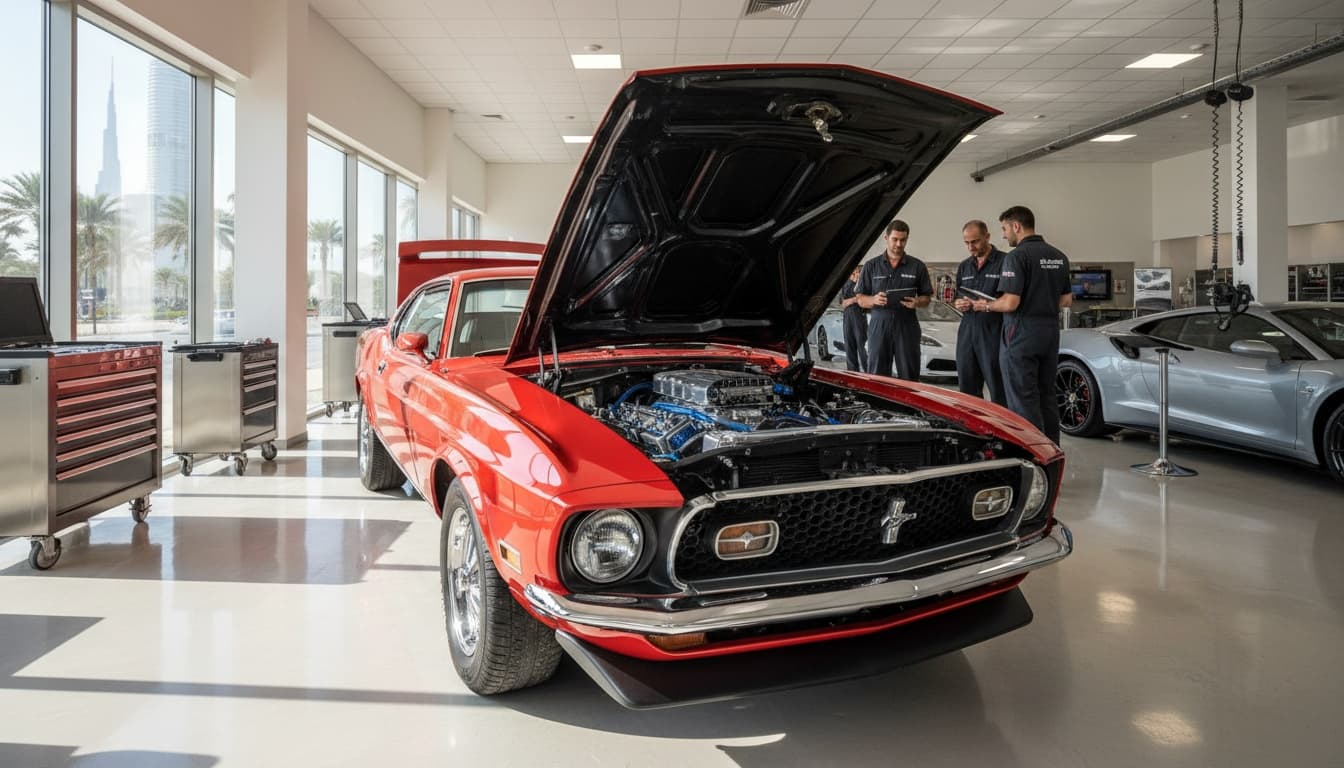
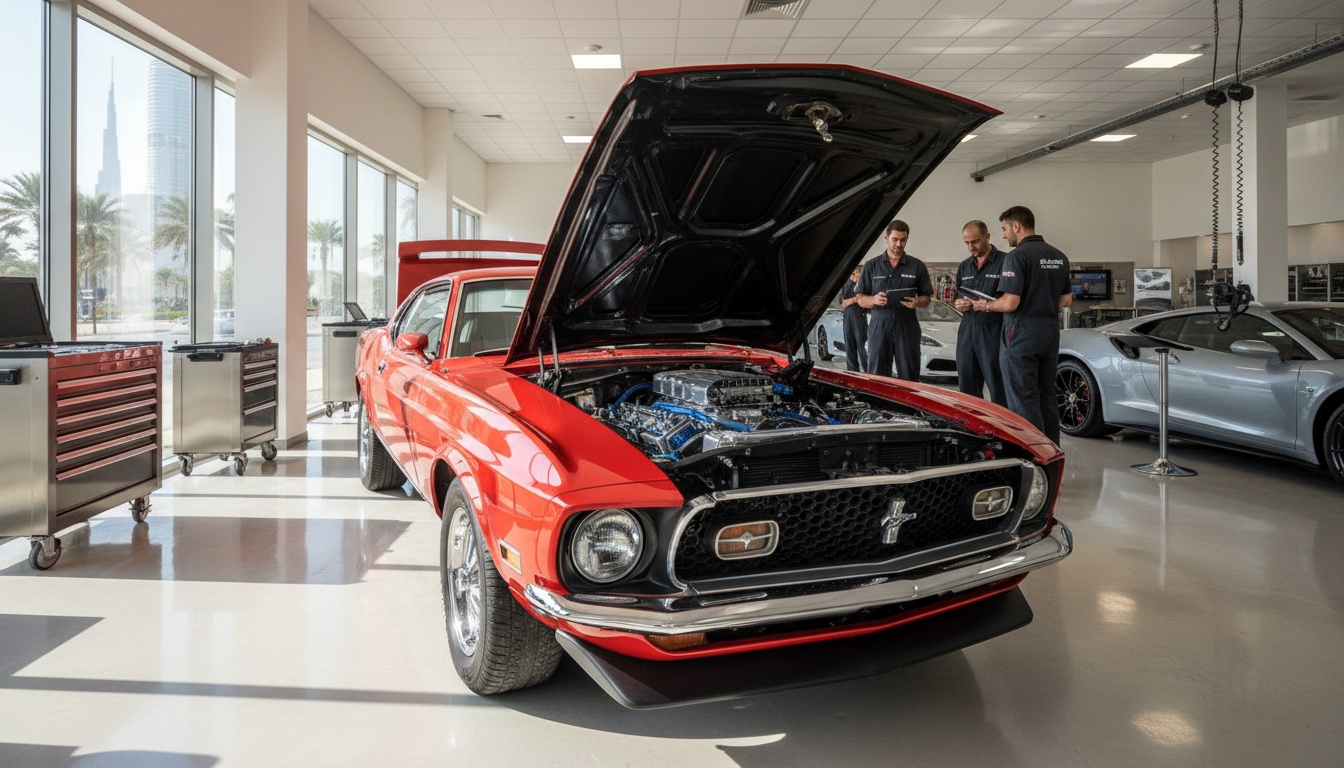
"Restomodding" — restoring a classic car while modernising its mechanics — has become a thriving subculture among UAE collectors. Dubai and Abu Dhabi's automotive communities increasingly pursue engine swaps for three reasons: reliability in extreme Gulf heat, performance upgrades, and sustainability through EV conversions.
A 1970s American muscle car with a modern LS V8, a British classic fitted with a turbocharged four-cylinder, or a heritage European coupe converted to an electric drivetrain — these are no longer rare sights at UAE meets. However, the mechanical excitement must be matched by legal awareness.
The UAE's classic car scene operates within specific parameters. Vehicles over 25 years old may qualify for classic status, but any modification to the powertrain triggers a chain of regulatory and insurance obligations that many enthusiasts overlook.
For owners already navigating insuring cars older than 15 years under UAE's 2026 rules, an engine swap adds another layer of complexity that demands early attention.
The 2026 Framework for Insuring Modified Classic Cars in the UAE
The UAE's insurance landscape for modified classics has matured significantly. In 2026, underwriters — guided by the Central Bank of the UAE's motor insurance framework — apply distinct treatment to engine-swapped vehicles compared to standard classics.
Agreed Value vs. Market Value is the central debate. Standard classic car policies often use market value, which rarely accounts for the cost of aftermarket components. Post-swap, an agreed value policy becomes essential. Garage invoices, dyno-test results, and specialist appraisals are used to establish the sum insured — ensuring your AED 150,000 LS swap isn't written off at a fraction of its worth.
| Feature | Original/Matching Numbers | Modern Engine Swap (Restomod) |
|---|---|---|
| Valuation Method | Historical Rarity / Market Value | Agreed Value (Sum Insured) |
| Premium Loading | Standard Classic Rates | Modified Risk Loading (+15–30%) |
| RTA Documentation | Standard Registration | Technical Passing Certificate Required |
| Classic Discount Status | Often Eligible | May Be Reclassified as High-Risk |
| EV Conversion Incentives | Not Applicable | Possible Sustainable Motor Discount |
The 2026 trend toward "green swaps" — converting classics to electric drivetrains — introduces a new variable. Some UAE insurers are beginning to offer sustainable motor incentives for EV-converted heritage vehicles, though coverage nuances around battery systems require careful scrutiny. Owners exploring EV conversions should also review EV home charger fire and car insurance coverage in the UAE to understand related liability exposures.
You can compare classic and modified motor insurance plans on licensed platforms to identify policies that accommodate agreed value terms for restomod builds.
Essential Factors Influencing Your Premium: Performance vs. Reliability
Insurers assess engine-swapped classics through a modified risk lens. Here are the primary premium drivers in 2026:
- Horsepower increase: A significant power jump — say, from 150bhp to 450bhp — moves your vehicle into a high-performance category, increasing third-party liability (TPL) exposure. Higher horsepower directly correlates with greater accident severity risk.
- Engine origin: A same-manufacturer swap (period-correct upgrade) is treated more favourably than a cross-manufacturer transplant (e.g., a Japanese engine in a European classic).
- EV conversions: Electric drivetrain swaps introduce battery fire risk and unique repair cost considerations — factors that parallel issues covered in out-of-warranty EV battery insurance in the UAE.
- Usage pattern: Is this a weekend show car or a daily driver? Classic car insurance in the UAE often restricts annual mileage. Using your restomod as a regular commuter can invalidate coverage — a risk explored in depth for classic car daily drivers in UAE 2026.
Compare & Choose a Plan
Step-by-Step: The RTA Inspection and Insurance Disclosure Process
Regulatory compliance is non-negotiable. Here is the correct sequence for UAE residents:
- Complete the engine swap at a qualified workshop. Retain all invoices, parts certificates, and dyno-test records.
- Apply for a Technical Inspection at an RTA-approved centre such as Shamil or Tasjeel. A Technical Passing Certificate is mandatory for any non-original engine before road use.
- Update your Mulkiya (vehicle registration) through the RTA to reflect the new engine specifications. Driving with outdated registration details is a traffic offence.
- Notify your insurer immediately. Disclose the modification formally in writing. Provide the Technical Passing Certificate, garage invoices, and any dyno results.
- Negotiate your agreed value based on documented modification costs. Do not accept a generic market value assessment for a heavily modified vehicle.
- Review your TPL limits. Higher-powered vehicles may require increased third-party liability coverage given greater accident risk.
The RTA's technical inspection process is governed by standards enforced through approved testing centres. For guidance on the RTA's official requirements, visit rta.ae.
Get a Free Quote Now
Conclusion
Bottom line: Classic car engine swaps in the UAE are legally permissible but carry significant insurance and compliance obligations in 2026. Every modification must be disclosed, RTA-certified, and properly valued through an agreed value policy to ensure full protection. The cost of cutting corners far exceeds the premium loading of doing it correctly.
Short Summary: Engine swaps on UAE classics trigger RTA inspections, insurance disclosures, and agreed value requirements — here's what every restomod owner must know in 2026.
Meta Description: Classic car engine swap insurance in UAE 2026: RTA rules, agreed value policies, and premium impacts explained for restomod owners in Dubai and Abu Dhabi.
Slug: classic-car-engine-swap-insurance-uae-2026
Explore Plans →
FAQ
Does an engine swap void my existing classic car insurance policy in the UAE?
Yes, if undisclosed. Failing to notify your insurer of an engine swap constitutes material misrepresentation, which grants the insurer grounds to void your policy entirely. Always disclose modifications in writing before or immediately after the swap is completed.
Can I insure a vintage car with a modern LS or EV motor swap under classic terms?
Possibly, but with conditions. Some UAE specialist insurers will cover restomod builds under modified classic terms, typically requiring an agreed value policy, RTA Technical Passing Certificate, and a premium loading of 15–30% above standard classic rates.
What documentation do I need from the garage to satisfy UAE insurers?
You will need itemised invoices for all parts and labour, dyno-test results confirming output figures, the RTA Technical Passing Certificate, and an independent valuation report. Comprehensive documentation is the foundation of a valid agreed value claim.
How does increasing horsepower through a swap affect my Third-Party Liability coverage?
A significant horsepower increase elevates your vehicle's risk classification. Insurers may require higher TPL limits given the greater potential severity of accidents. This is a mandatory discussion point with your insurer before the modification is finalised.
Is agreed value better than market value for a modified vintage vehicle in 2026?
Unanimously yes. Market value rarely reflects the cost of aftermarket components, specialist labour, or rare parts. An agreed value policy — where you and the insurer pre-agree the sum insured — ensures you are never undercompensated after a total loss on your restomod build.
Editorial note: This article is for general information and does not constitute insurance advice. Always confirm terms with your insurer.